
THE STORY
The Arlington Marker – Part 2
A short-lived legacy…
In the 1930’s the Arlington Sacred Soil Marker and its overseas counterparts played a significant role in joint Franco-American remembrance efforts.
From 1930-1933, the U.S. and French government began a series of pilgrimages for American mothers and widows to visit the graves of their lost loved ones.
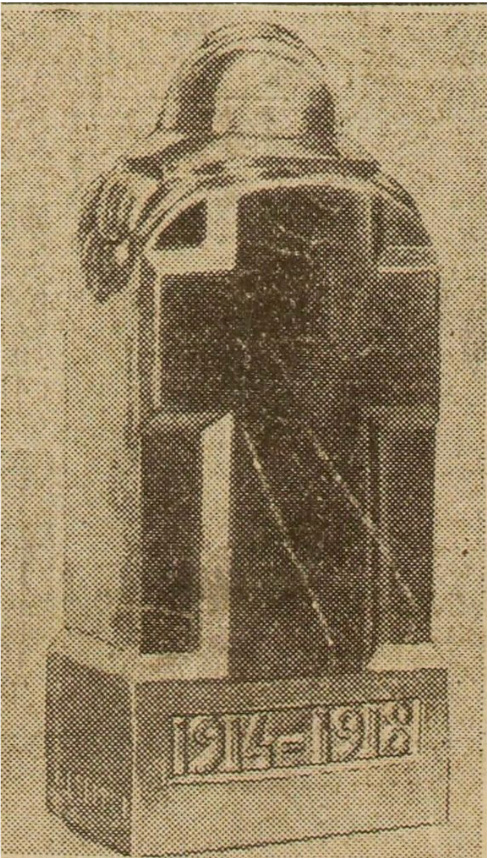
In June, 1930, the president of the Association of the Sacred Soil Markers presented one of the early pilgrimage groups with a special bronze version of the Arlington marker.
On August 23, 1931, a Sacred Soil Marker was placed on the Atlantic coast of France to commemorate these journeys, and to honor the sons and husbands of the women taking part.
In the mid-1930’s, the Arlington marker took part in the annual Ceremony of Wheat, receiving sheaves of wheat harvested from the Sacred Soil Marker at Meures, the home of artist Gaston Deblaize.
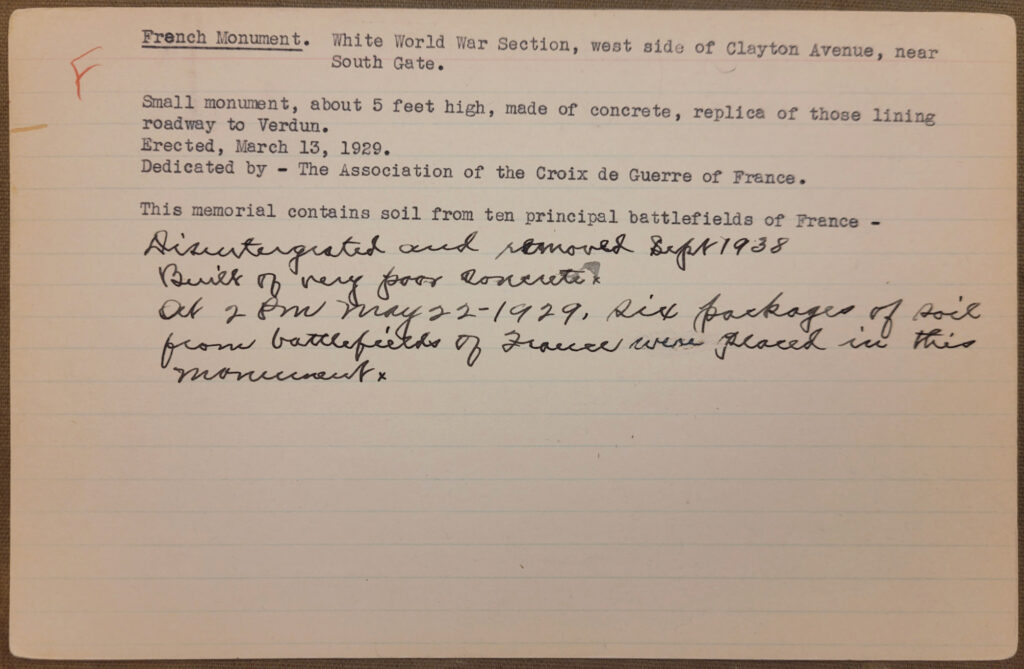
Unfortunately, due to an apparent flaw in its construction, the original Sacred Soil Marker at Arlington did not last long. After nine years of exposure to the elements, the marker disintegrated. Its remnants were removed in September, 1938.
Shortly afterwards, World War II came to dominate America’s efforts in the area of remembrance and memorialization. The Arlington Marker was forgotten, and nearly lost to history.
But now, as the United States looks back on 250 years of history, our trans-Atlantic coalition is working to restore this long-lost memorial — a symbol of America’s heritage of service and sacrifice, and of her friendship with France, her oldest ally. » Learn more about our efforts